Daylight and Visual comfort
Daylight shapes our experience of spaces, it influences visual comfort, supports circadian rhythms, connects to the outside world, and affects our mood and productivity. Yet buildings often fail to harness daylight effectively, either providing too little (leading to reliance on electric lighting and loss of health benefits) or too much (causing glare, thermal discomfort, and energy penalties from cooling).
This research track advances the science of how people experience daylight and translates those findings into practical design guidance. This work spans fundamental vision science, glare models, view out from windows, shading & glazing testing, and real-world field studies to create evidence-based strategies for achieving visual comfort while supporting occupant health and building sustainability.
Completed Work
Advancing the Science of Discomfort Glare
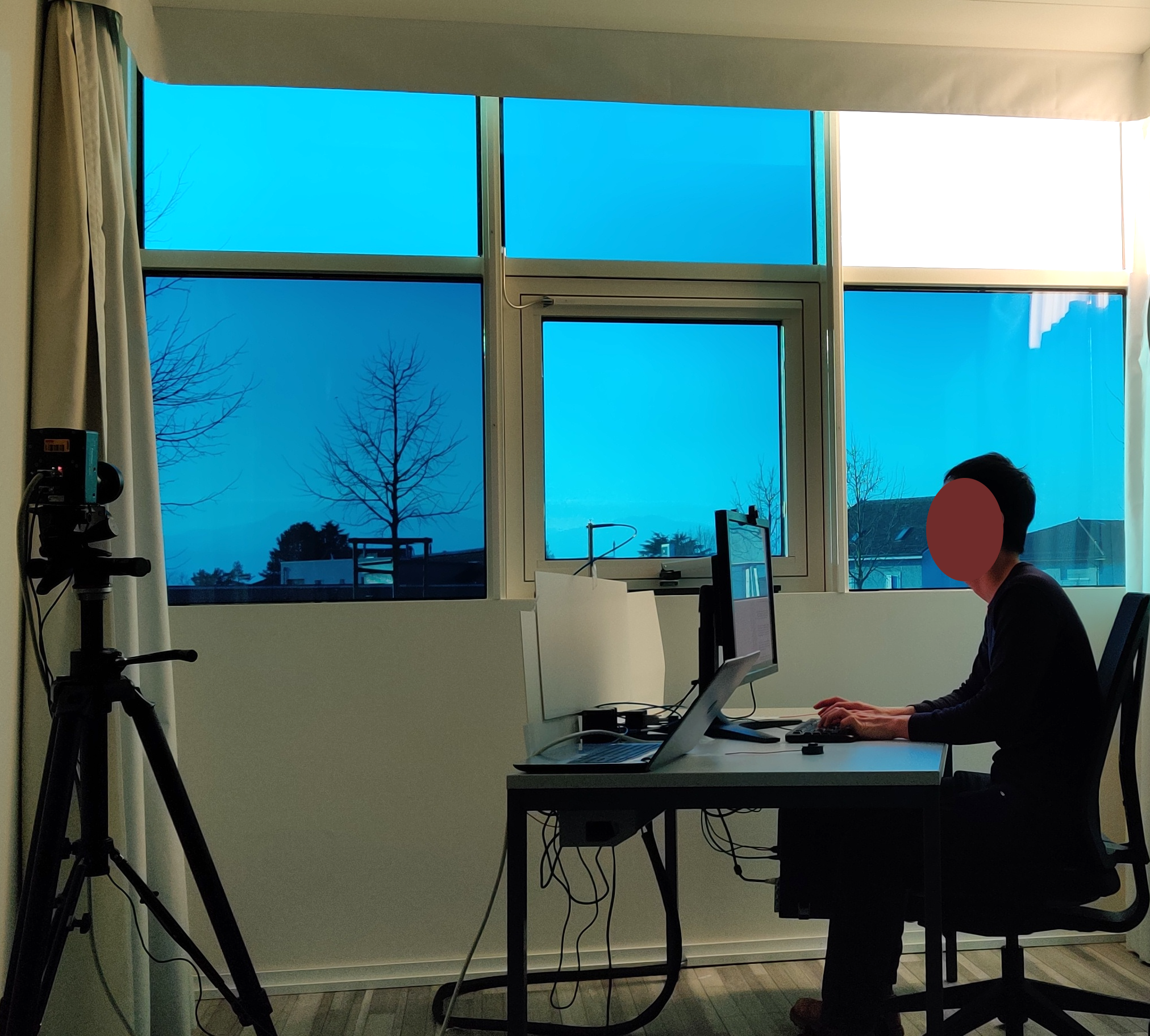
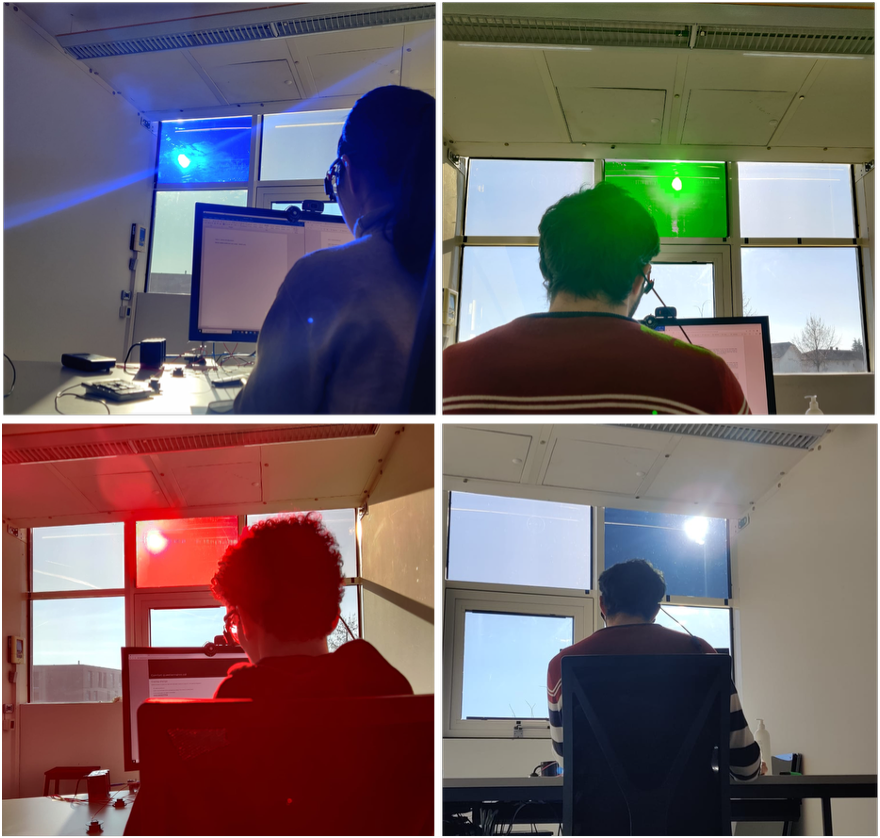
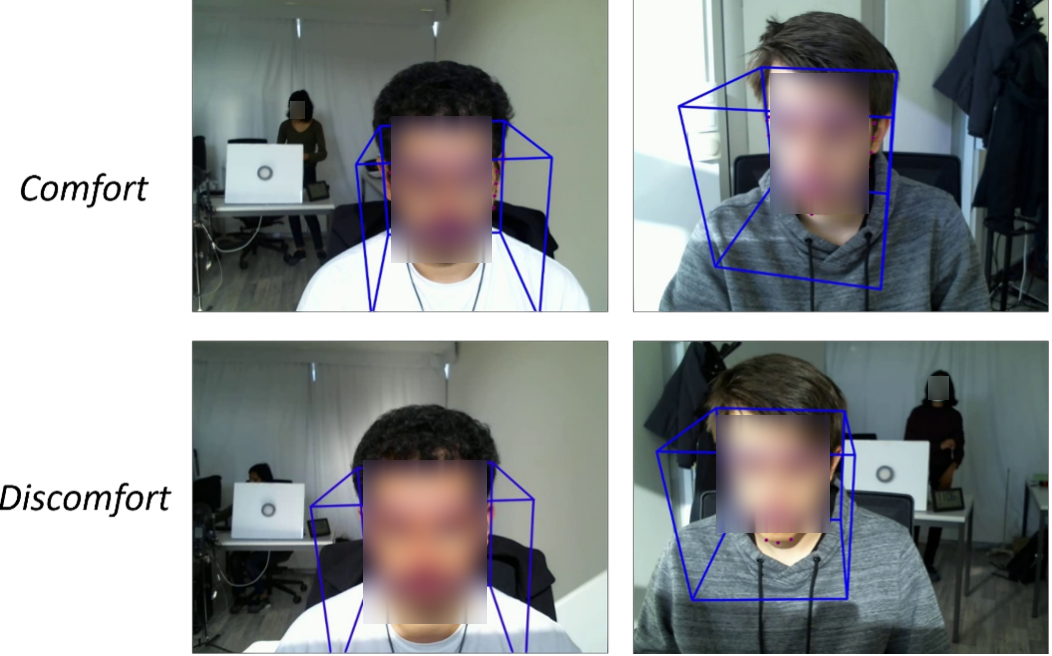
Through controlled psychophysical experiments at EPFL, we established that both the spectral content of daylight (its color composition) and individual eye physiology (macular pigment density in the retina) influence how discomfort glare is perceived. Existing glare prediction models failed to consider these factors, leading to inaccurate assessments, especially in buildings with tinted or colored glazing.
Key Contributions:
- Developed a modified discomfort glare model that accounts for spectral effects
- Directly informed European Building Standard EN 17037 on Daylight in Buildings, redefining visual comfort thresholds for tinted glazing in office spaces
Selected Publications
- S Jain, J Wienold, L Hellwig, M Andersen, Influence of color on glare perception revealed when seeing the sun through colored, Scientific Reports by Nature, Sep 2025.
- S Jain, J Wienold, C Eandi, S Gisselbaek, A Kawasaki, M Andersen, Influence of macular pigment on the sensitivity to discomfort glare from daylight, Scientific Reports by Nature, Oct 2023.
- S Jain, J Wienold, M Lagier, A Schuler, M Andersen, Perceived glare from the sun behind tinted glazings: Comparing blue vs. color-neutral tints, Building and Environment, March 2023.
Ongoing & Future Work
Understanding Occupant Light Exposure and Health Links
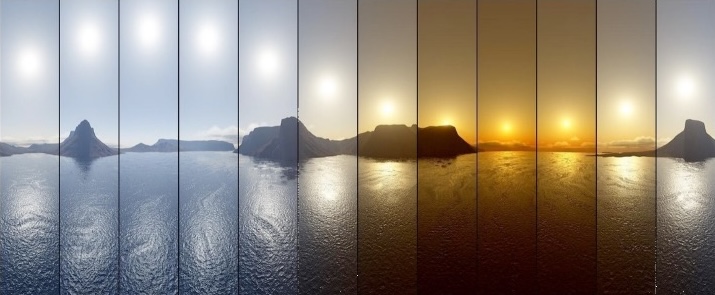
Despite decades of laboratory research, we know surprisingly little about how people actually accumulate light exposure throughout their day—across homes, workplaces, and transit—and how these dynamic patterns affect sleep, mood, alertness, and long-term wellbeing. Our goal is to establish empirically how specific building features shape personal light exposure and downstream health outcomes, generating evidence for architects, building standards, and public health policy.
We are currently recruiting students for this research. Learn more here.
Media & Recognition
- Featured in science documentary Daylight Revolution, 6th Global Science Film Festival (Basel, 2024)
- Coverage in EPFL News: Article 1, Article 2