Aging in place
Globally, the population aged 60 and older will nearly double by 2050 and the population aged 80 years or older is expected to triple between 2020 and 2050 making 22% of the world’s population.
This demographic shift demands targeted research and design interventions in the living environments of older adults by (i) understanding how indoor environmental quality impacts their health, (ii) proposing design strategies that support their wellbeing, and (iii) contributing to preventative care through better building design.
Our work focuses on evidence-based design for aging in place, combining field studies, environmental monitoring, and co-design with older adult communities to create living environments that support independence, health, and quality of life.
Ongoing Projects
Lighting Requirements and Design Guidelines for Older Adult Living Facilities
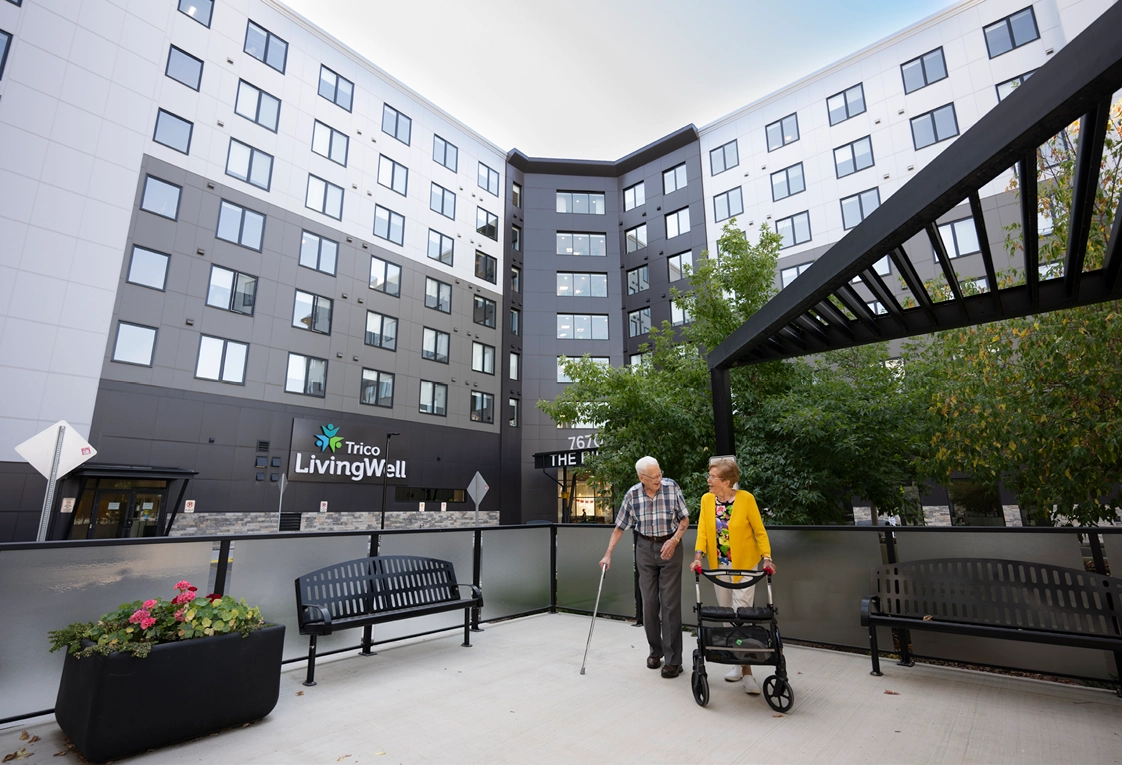
Ongoing This work synthesizes current lighting requirements for older adults from both peer-reviewed research and building standards (LEED, WELL, etc.). We’re developing evidence-based design interventions that address age-related visual changes, circadian health needs, and safety requirements specific to senior living environments.
Research Questions:
- What are the gaps between current building standards and empirical evidence on lighting needs for older adults?
- How can design interventions fulfill these requirements through daylighting, electric lighting, and adaptive technologies?
- What role can personalized lighting play in supporting healthy aging?
Team
Students:
- Michaela Reid-Samuel, summer intern, University of Calgary
- Jona Kelava, summer intern, University of Calgary
Collaborators:
- Dr. Michael Antle, Department of Psychology, University of Calgary
- Alvin Fritz, Principal architect, Alvin Reinhard Fritz Architect Inc.
- Dr. Roxanne Sterniczuk, Psychologist
Funding: Alberta Innovates
Completed Projects
Sustainable Retrofits and Wellbeing in Affordable Senior Housing


Completed at Stanford University
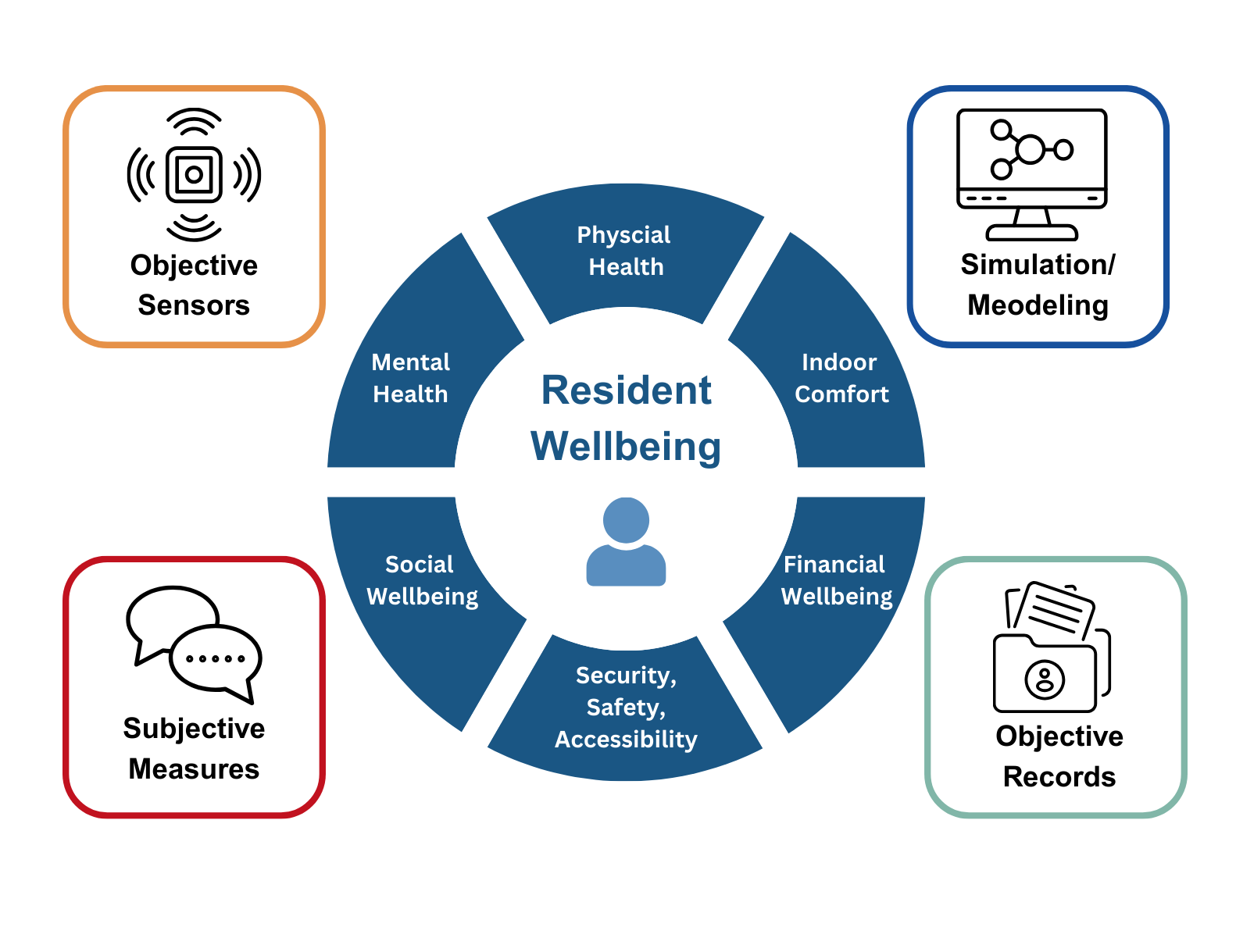
This field study examined how sustainable retrofitting of affordable housing for older adults in San Francisco’s Chinatown impacted five domains of wellbeing: physical, emotional, social, environmental, and functional. Through mixed-method approach co-developed with community partners and culturally responsive engagement with residents, we documented how the changes in indoor environmental quality and resident-reported health outcomes related to the building upgrades.
Team
- Andrea Green, Stanford University
- Flora Xu, Stanford University
- Esteban Germann, EPFL
- Dr. Deland Chan, Chinatown Community Development Center
- Prof. Sarah Billington, Stanford University
Related Publications
- S. Jain, E. Germann, A. Green, and J. Xu, D. Chan, S. Billington, Assessing window view quality in a renovated affordable housing for older adults, 10th VELUX Daylight Symposium, Sep 2025
- F. Xu, A. Green, S. Jain, D. Chan, S. Billington, Impact of sustainable retrofitting on resident wellbeing: A critical review, Building and Environment, 2025.